Coding Period Week 11 (August 7 ~ August 13)
This week was a massive milestone for the project! The primary focus was on completing the end-to-end workflow testing, finalizing pending PRs, and fully automating the block documentation pipeline.
🎯 The Main Goals for the Week
During our last meeting, we defined the following core tasks:
- Complete end-to-end workflow testing, including the new library integration.
- Finalize all pending PRs and merge them after mentor reviews.
- Prepare documentation for publishing blocks to the Marketplace and automate it using CI/CD.
- Update the project blog with the latest progress.
- Define and document the workflow for handling future block additions to the
VisualCircuit-resourcesrepository.
🚀 Finalizing PRs & Library AST Extraction
I kicked off the week by merging several pending Pull Requests across the repositories:
While working on the Django implementation for downloaded blocks, a critical issue was raised: Issue #470. VisualCircuit only supports specific libraries built into the environment. If a user uploads a block containing an unsupported library, it fails natively. To fix this, I engineered a Python AST (Abstract Syntax Tree) script! The script scans every custom block for import or import from statements, extracts the library, and automatically maps it to the correct internal dependency (for example, mapping cv2 to python-vision). I submitted this fix in VisualCircuit PR #478.
📄 Automating the Documentation (blocks.html)
One of the major tasks was automating the documentation so that whenever a new block is approved in the Marketplace, its documentation is automatically generated.
The Problem: The documentation file (blocks.html) lived inside the main VisualCircuit repository, but the custom blocks were being pushed to the VisualCircuit-resources repository. Because they were in different repos, the CI/CD pipeline couldn’t automatically edit the HTML!
The Solution: After discussing it with my mentor, we decided to migrate the entire blocks.html documentation over to the VisualCircuit-resources repository.
- I raised VisualCircuit PR #495 to change the documentation routing.
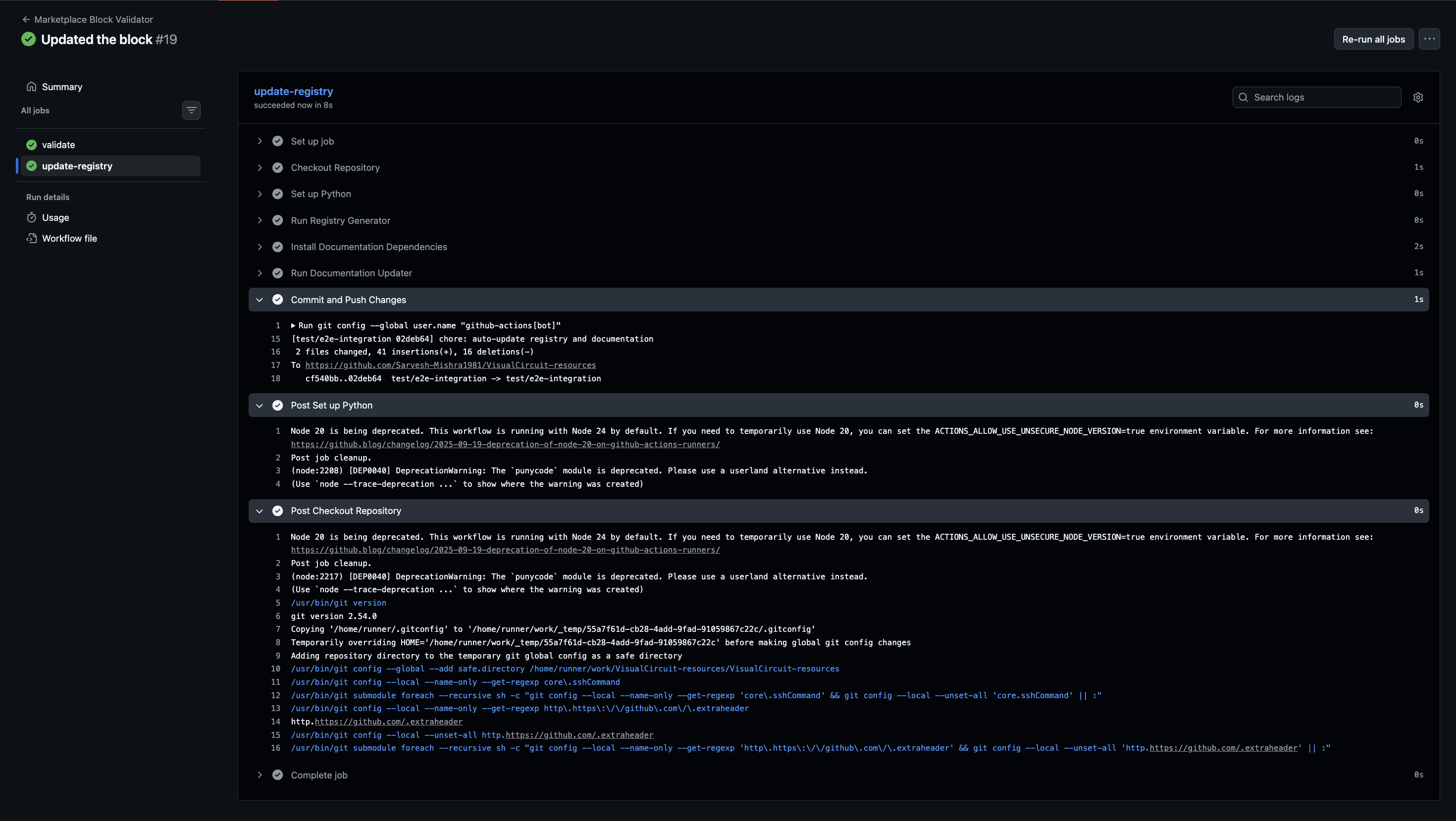
- I then created VisualCircuit-resources PR #19, which contains the Python automation script. Now, whenever a block is pushed, a GitHub Action automatically scripts and formats its details into
blocks.html!
🧪 End-to-End Workflow Testing
With the architecture finally complete, I ran a full end-to-end test of the entire Marketplace pipeline:
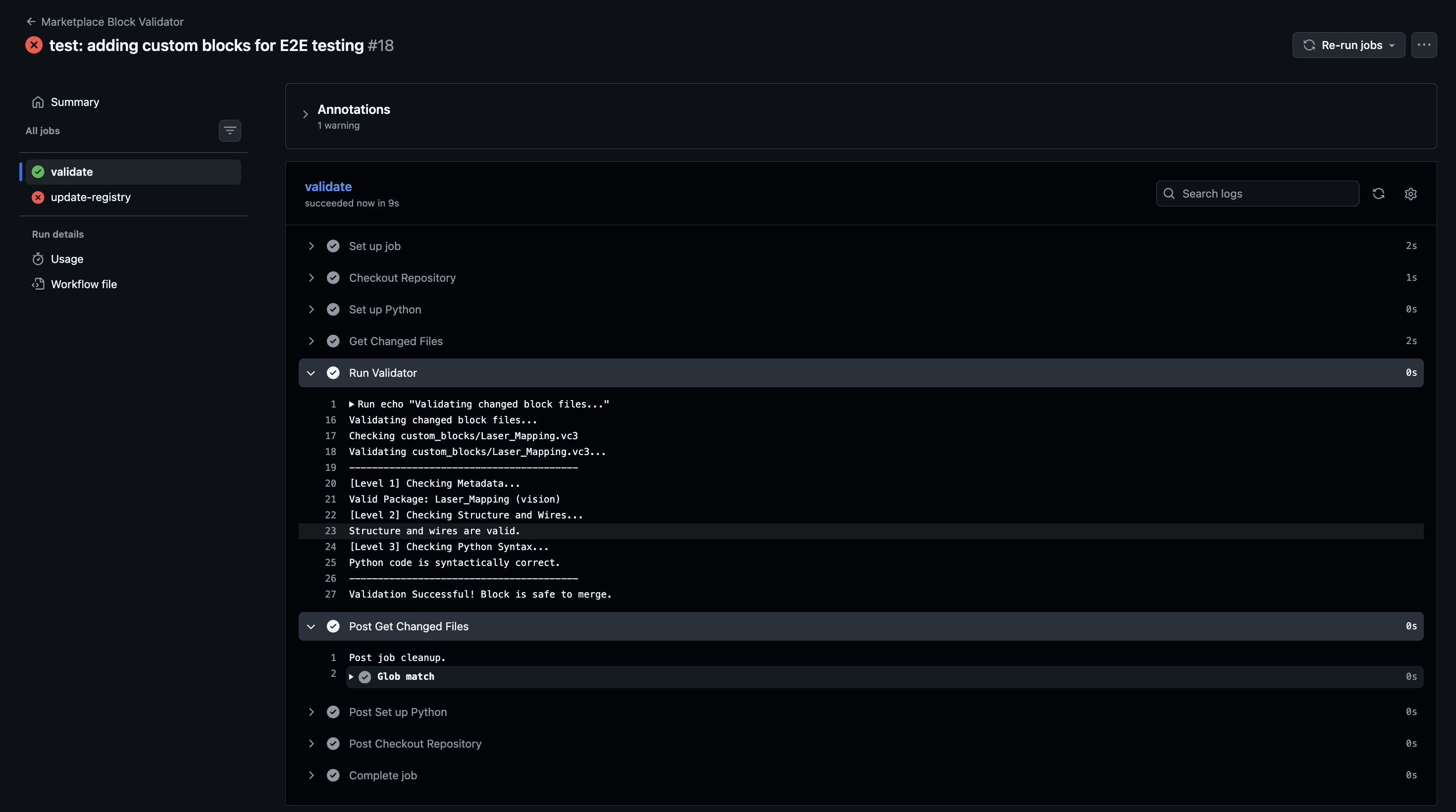
Block Push & Validation: I pushed a custom block and watched the CI/CD pipeline run the 3-level architecture test and successfully update
registry.json.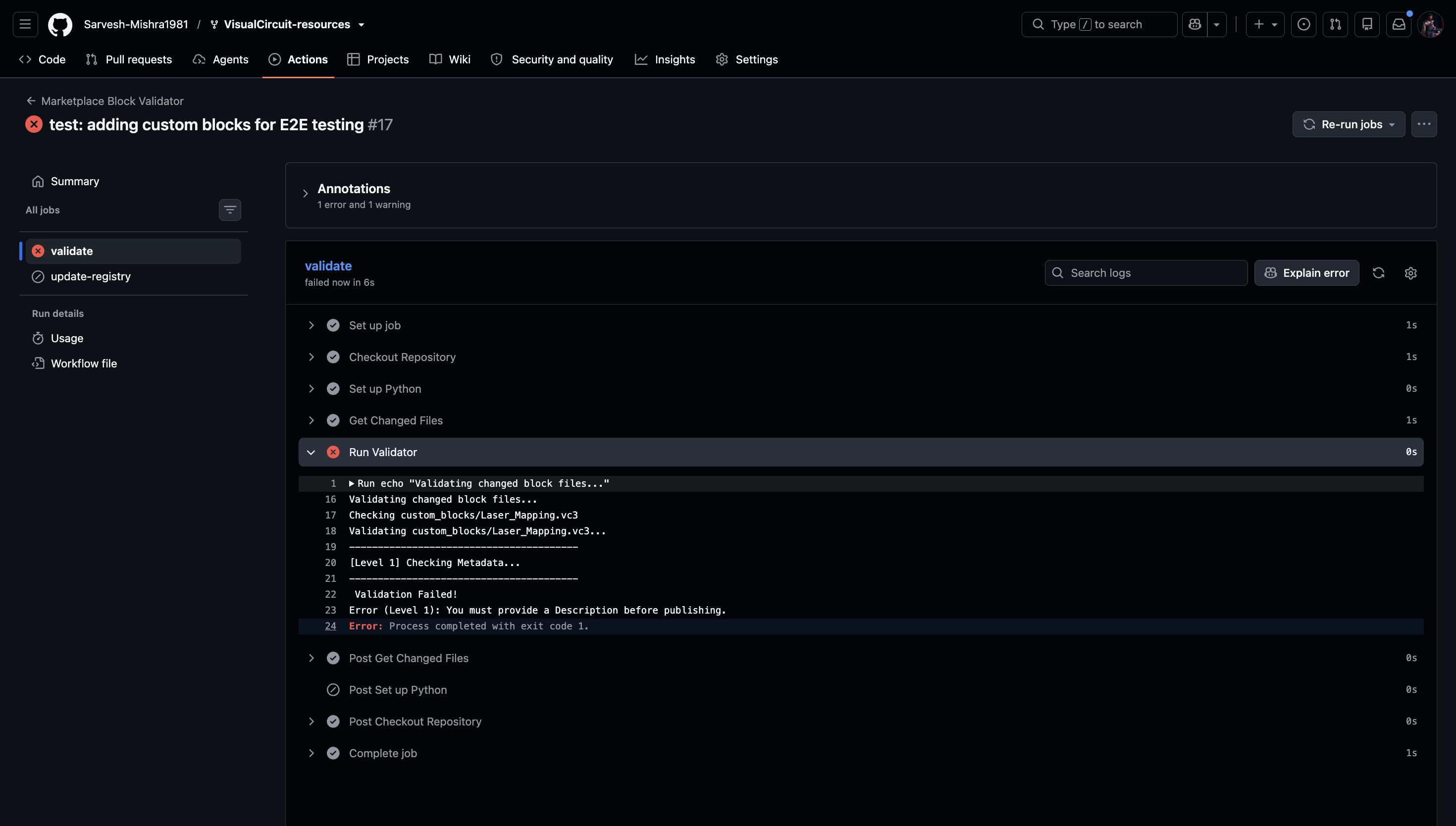
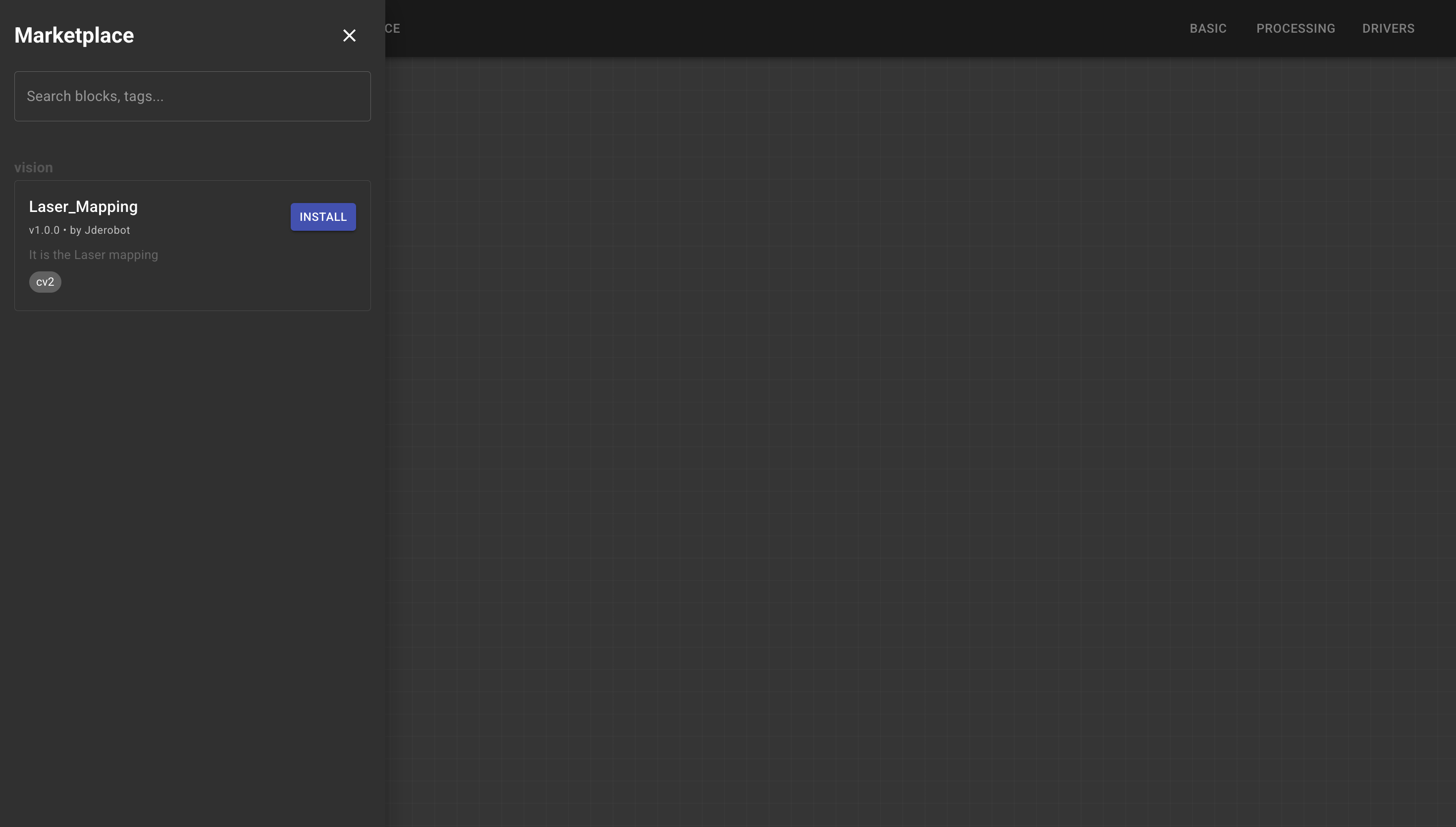
Marketplace Listing: I opened the VisualCircuit frontend and verified that the block was correctly fetched from the cloud and listed in the Marketplace UI.
Downloading & Documentation: I downloaded the block. It saved perfectly to the local hard drive via the Django backend, immediately appeared in the local palette, and I verified that the automated documentation in
blocks.htmlhad generated correctly!
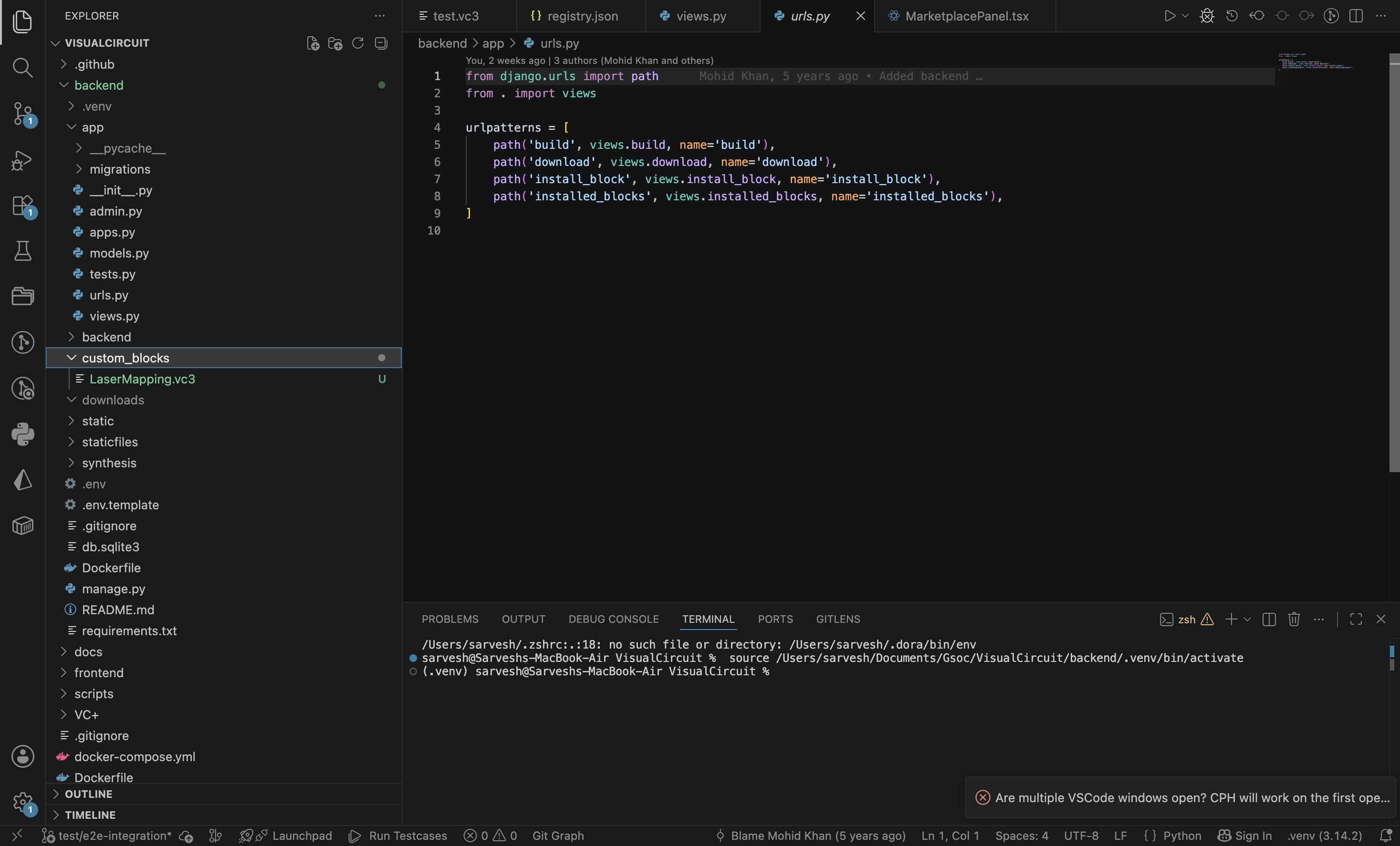
Here is the complete video showcasing the entire end-to-end workflow in action:
🤝 Mentor Meeting
We had a highly productive sync this week to review the AST library extraction, finalize the documentation migration, and officially approve the end-to-end testing workflow!